
Description of the work:
- Public artwork
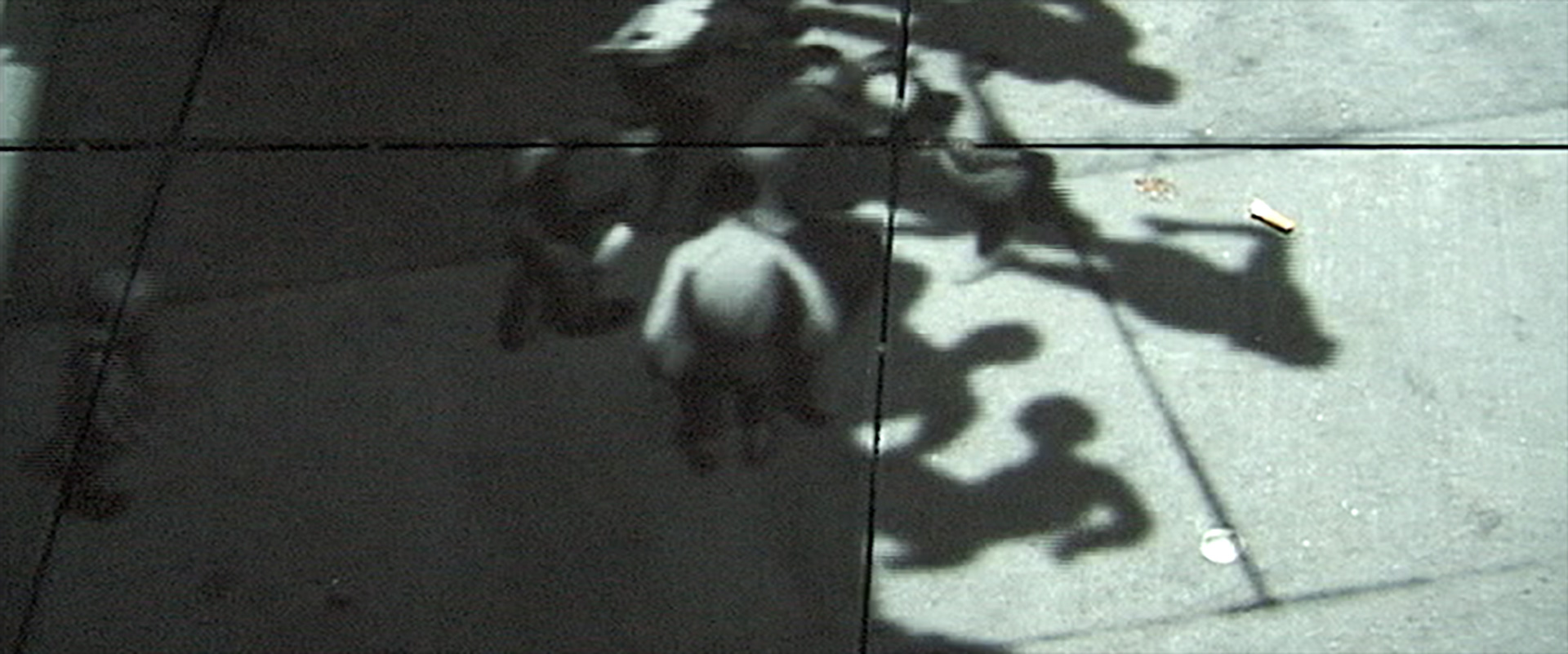
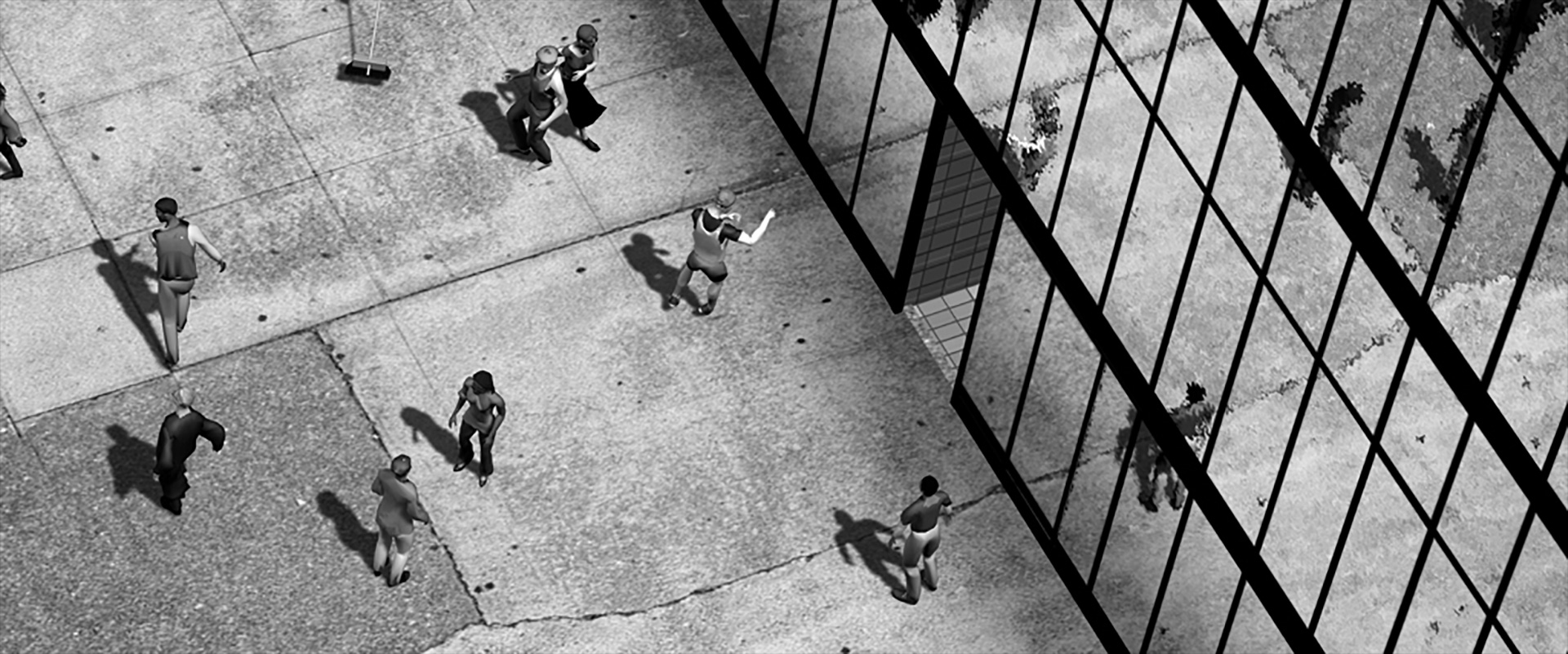
- Using a projector to project an animation of moving tiny human
onto sidewalks or concrete floor - It shows the movements of 3D tiny human moving in busy streets,
plazas, opening umbrellas, etc. - The 3D models are from kids to adults. Their outlooks include school
kids up to businessmen. - These models are derived from database of motion. They capture and
re-edit the sequence for each model in different scenes - The animation is in a 13 minutes loop
- Audience have to hover above to see the 3D models moving
- There are no narratives, but music to let the audience think and talk about
the work freely 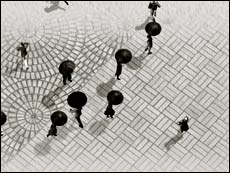
Thought provoking parts of the work:
- This work let us, the audience act as omniscient observers.
- Audience can only look at the models moving but no interactions between,
this let us really think about how we are in reality. - There is no narratives, but a soundtrack. This allows the audience to think about
the work with the others freely.
Quotes:
1.All of this looks strikingly real at first. The movements of the people
are at once weirdly robotic and life- like. But then you realize that it
is all animated. The combination of trompe l'oeil illusion and
artificiality gives the effect of a hyper-real dream.
Ken Johnson, ART IN REVIEW: Shelley Eshkar, Paul Kaiser -- 'Pedestrian', March 01, 2002.
-->Ken is trying to point out that we are like falling into a dream world when looking at the animation. It allows us to think about our lives through this dream.
-->Ken is trying to point out that we are like falling into a dream world when looking at the animation. It allows us to think about our lives through this dream.
2.Pedestrian positions us as omniscient observers, panning over
the city as if from a police helicopter. Removed from the figures below,
we witness the movements of the city's inhabitants without the ability
to interact with them. At the same time, because these figures occupy
the actual physical space in which we stand, we are somehow implicated
in their lives.
Kelly Salmon, Pedestrian By: Paul Kaiser and Shelley Eshkar , SEPTEMBER 2, 2009
https://wiki.brown.edu/confluence/display/MarkTribe/Paul+Kaiser+and+Shelley+Eshkar
https://wiki.brown.edu/confluence/display/MarkTribe/Paul+Kaiser+and+Shelley+Eshkar
-->Kelly is trying to point out that audiences act like omniscient observers here. And we will be like involving in the city as we are stepping on it.
My Opinion:
- Allow us to stop and think about how our lives are like
Apart from being that rush, we should actually stop and take a little rest. - Get a chance for us to discuss with people looking at the work what is going on
as there is no narrative to square our mind - Let one know that we should care more the world instead of just rushing in streets
Related websites:
https://wiki.brown.edu/confluence/display/MarkTribe/Paul+Kaiser+and+Shelley+Eshkar
http://www.gmu.edu/depts/gallery/2003/kaiser.html